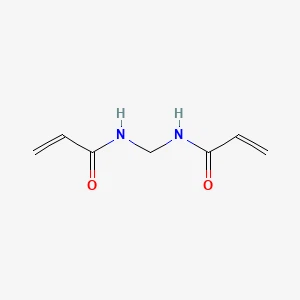
Speċifikazzjonijiet
| Dehra | Liquido ħafif isfar oleżż |
| Sn (T) | 18% min |
| Indiċi ta' rifrazzjoni (25 grad) | 1.468 ± 0.001 |
| Densità (20 grad) | 1.05 ± 0.02 |
| Volatilità | 1% max |
| Kromatità | 100 massimu |
Informazzjoni dwar il-Transport
|
Parametru |
Speċifikazzjoni |
|
Numru UN |
3077 |
|
Klassa |
|
|
Grupp ta' Imballaġġ |
|
|
Kodiċi H.S. |
2931900090999 |
|
Stabbiltà u Reattività |
Il-prodott huwa kemikament stabbli taħt kundizzjonijiet ambjentali standard. |
|
Ħażna |
Ħallih magħluq tajjeb. Iżżomm f'żona friski u skura. Iżżomm f'post ventilat tajjeb. Iżżomm magħluq. |
|
Kundizzjoni biex tevita |
|
|
Pakkett |
Informazzjoni dwar il-Manifattura
|
Parametru |
Speċifikazzjoni |
|
Kapaċità |
20MT/xahar |
|
Frekwenza |
|
|
Production since 2010 |
|
Dibutyltin dilaurate (DBTDL) is a highly effective organotin compound widely used as a catalyst in various chemical industries. Its primary application is in the production of polyurethane foams, elastomers, and coatings, where it catalyzes the reaction between polyols and isocyanates to form urethane linkages efficiently. It is also utilized in the synthesis of silicones, where it accelerates condensation and cross-linking reactions to produce silicone rubbers, sealants, and resins. Beyond polyurethane and silicone chemistry, DBTDL serves as a catalyst in esterification and transesterification reactions, facilitating the production of specialty esters, plasticizers, and lubricants. In laboratory-scale organic synthesis, it is employed to promote selective reactions, including acylation, ring-opening polymerization, and other organometallic transformations. Its high catalytic efficiency, thermal stability, and solubility in organic solvents make it an indispensable component in industrial manufacturing and research applications.
The benefits of dibutyltin dilaurate derive from its high catalytic activity, selectivity, and compatibility with diverse reaction systems. In polyurethane production, it enables faster reaction rates and improved control over polymer architecture, leading to foams, coatings, and elastomers with consistent mechanical properties and durability. Its ability to catalyze reactions under relatively mild conditions reduces energy consumption and minimizes unwanted side reactions, enhancing overall process efficiency. In silicone chemistry, DBTDL ensures uniform cross-linking and superior material performance, contributing to the production of high-quality silicone rubbers and sealants. Additionally, its versatility in esterification and polymerization reactions allows manufacturers and researchers to streamline synthesis pathways, reduce catalyst loading, and improve reproducibility. These advantages make it a valuable tool for both large-scale industrial applications and precise laboratory syntheses.
In summary, dibutyltin dilaurate is a versatile and powerful catalyst widely used in polyurethane, silicone, and ester chemistry. Its applications in promoting efficient polymerization, esterification, and acylation reactions, combined with benefits such as high activity, selectivity, and thermal stability, make it a key component in both industrial and research settings. By enhancing reaction efficiency, product quality, and process control, DBTDL continues to play a critical role in chemical manufacturing, material production, and synthetic chemistry.
It-tags Popolari: dibutyltin dilaurate丨cas 77-58-7, Ċina dibutyltin dilaurate丨cas 77-58-7 manifatturi, fornituri, fabbrika